AI Agent for AgTech: Automate Precision Agriculture, Crop Monitoring & Farm Decision Support
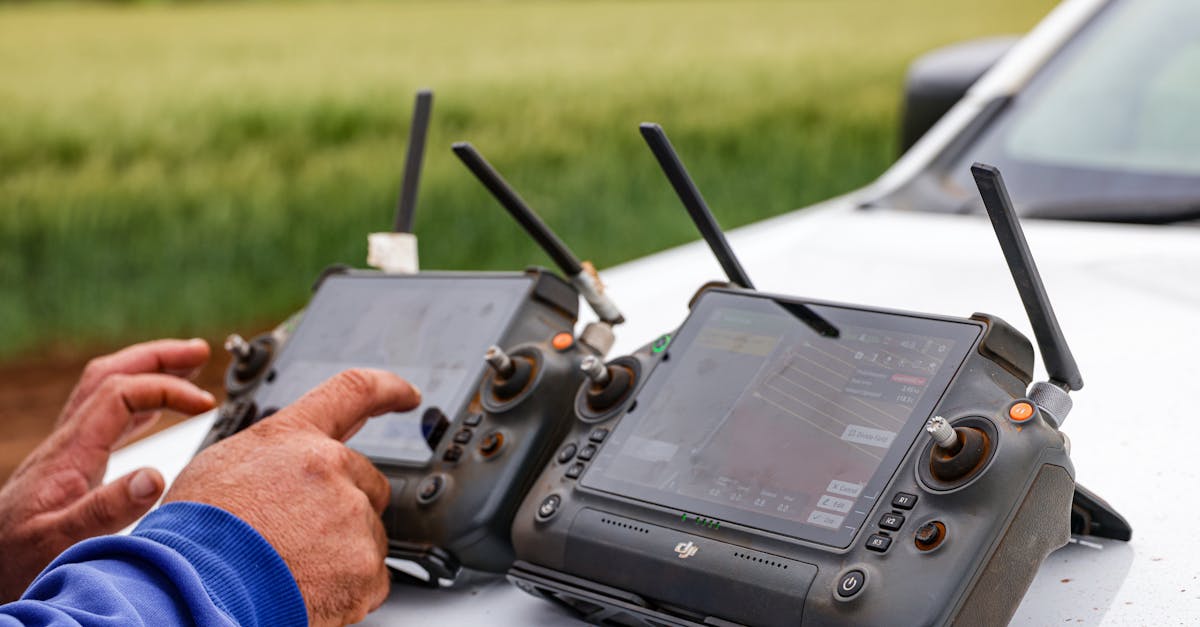
Photo by Magda Ehlers on Pexels
Modern row crop operations generate terabytes of spatial data every season from drones, satellites, soil sensors, and yield monitors, yet most farms still make input decisions based on field averages rather than sub-acre prescriptions. A 5,000-acre corn-soybean operation applying nitrogen at a flat rate across every zone is leaving $30-80 per acre on the table. The gap between data collection and data-driven action is exactly where AI agents deliver transformative value.
Unlike dashboard-based analytics that require a human to interpret maps and manually build prescriptions, an AI agent for precision agriculture ingests multispectral imagery, soil test results, weather forecasts, and commodity prices simultaneously, then outputs actionable prescriptions that upload directly to equipment controllers. It closes the loop from sensing to execution without waiting for an agronomist to review every field.
This guide covers six core areas where AI agents transform agricultural operations, with production-ready Python code for each. Whether you manage a family farm or a 50,000-acre enterprise, these patterns scale to your operation.
Table of Contents
1. Drone & Satellite Crop Monitoring
Multispectral imaging has become the backbone of precision agriculture scouting. Drones equipped with 5-band sensors (red, green, blue, red-edge, near-infrared) capture field imagery at 1-3 cm/pixel resolution, while satellite platforms like Sentinel-2 and Planet Labs provide 3-10 m/pixel coverage every 3-5 days. The AI agent fuses both data streams: satellites for broad trend detection across thousands of acres, and targeted drone flights for sub-meter diagnosis of problem areas flagged by satellite scans.
The agent computes vegetation indices including NDVI (Normalized Difference Vegetation Index) for overall biomass, NDRE (Normalized Difference Red Edge) for nitrogen status in mid-to-late season canopy, and GNDVI (Green NDVI) for chlorophyll concentration. By tracking these indices across growth stages from V4 through R6 in corn, the agent builds temporal profiles that distinguish nitrogen deficiency from water stress, herbicide drift from disease pressure, and late-emerging weeds from bare soil. Field boundary detection uses edge-detection algorithms on NIR bands to automatically delineate management zones that align with soil type transitions.
Weed mapping takes this further by classifying patches at the species level. The agent identifies broadleaf escapes in soybean fields versus grass pressure in corn, estimates weed density per square meter, and generates spot-spray maps that reduce herbicide volume by 60-80% compared to broadcast application. Stress detection algorithms flag areas where NDVI drops more than 1.5 standard deviations below the field mean, triggering automatic drone scouting missions to those GPS coordinates.
import numpy as np
from dataclasses import dataclass, field
from typing import List, Dict, Tuple, Optional
from enum import Enum

class GrowthStage(Enum):
    EMERGENCE = "VE"
    VEGETATIVE_EARLY = "V4-V8"
    VEGETATIVE_LATE = "V10-VT"
    REPRODUCTIVE = "R1-R3"
    GRAIN_FILL = "R4-R6"
    MATURITY = "R6+"

@dataclass
class MultispectralPixel:
    lat: float
    lon: float
    red: float         # band reflectance 0-1
    green: float
    blue: float
    red_edge: float
    nir: float
    timestamp: str

@dataclass
class CropHealthZone:
    zone_id: str
    center_lat: float
    center_lon: float
    area_acres: float
    mean_ndvi: float
    mean_ndre: float
    mean_gndvi: float
    stress_flag: bool
    weed_density: float    # plants per sq meter
    weed_species: str

class CropMonitoringAgent:
    """AI agent for multispectral crop health analysis and weed mapping."""

    NDVI_STRESS_THRESHOLD = 1.5    # std deviations below field mean
    WEED_CONFIDENCE_MIN = 0.75
    DRONE_TRIGGER_AREA_ACRES = 5   # min stressed area to trigger drone

    def __init__(self, field_boundary: List[Tuple[float, float]],
                 crop: str = "corn", growth_stage: GrowthStage = GrowthStage.VEGETATIVE_EARLY):
        self.boundary = field_boundary
        self.crop = crop
        self.growth_stage = growth_stage
        self.historical_ndvi = []

    def compute_indices(self, pixel: MultispectralPixel) -> dict:
        """Calculate vegetation indices from multispectral bands."""
        ndvi = (pixel.nir - pixel.red) / (pixel.nir + pixel.red + 1e-8)
        ndre = (pixel.nir - pixel.red_edge) / (pixel.nir + pixel.red_edge + 1e-8)
        gndvi = (pixel.nir - pixel.green) / (pixel.nir + pixel.green + 1e-8)

        # Chlorophyll estimate via red-edge ratio
        chlorophyll_index = (pixel.nir / (pixel.red_edge + 1e-8)) - 1

        return {
            "ndvi": round(ndvi, 4),
            "ndre": round(ndre, 4),
            "gndvi": round(gndvi, 4),
            "chlorophyll_index": round(chlorophyll_index, 4),
            "lat": pixel.lat,
            "lon": pixel.lon
        }

    def analyze_field(self, pixels: List[MultispectralPixel]) -> dict:
        """Full field analysis: health scoring, stress detection, weed mapping."""
        indices = [self.compute_indices(p) for p in pixels]
        ndvi_values = [ix["ndvi"] for ix in indices]
        ndre_values = [ix["ndre"] for ix in indices]

        field_mean_ndvi = np.mean(ndvi_values)
        field_std_ndvi = np.std(ndvi_values)

        # Stress detection: pixels below threshold
        stress_zones = []
        for ix in indices:
            if ix["ndvi"] < field_mean_ndvi - self.NDVI_STRESS_THRESHOLD * field_std_ndvi:
                stress_zones.append(ix)

        # Weed patch detection via low-NDVI clusters in bare-soil windows
        weed_patches = self._detect_weed_patches(indices, field_mean_ndvi)

        # Nitrogen status from NDRE (mid-late season only)
        n_status = self._nitrogen_assessment(ndre_values)

        stressed_acres = len(stress_zones) / len(indices) * self._field_area_acres()
        trigger_drone = stressed_acres >= self.DRONE_TRIGGER_AREA_ACRES

        return {
            "field_mean_ndvi": round(field_mean_ndvi, 4),
            "field_std_ndvi": round(field_std_ndvi, 4),
            "stress_zones_count": len(stress_zones),
            "stressed_acres": round(stressed_acres, 1),
            "trigger_drone_scout": trigger_drone,
            "weed_patches": len(weed_patches),
            "nitrogen_status": n_status,
            "growth_stage": self.growth_stage.value,
            "recommendation": self._health_recommendation(
                field_mean_ndvi, stressed_acres, n_status
            )
        }

    def _detect_weed_patches(self, indices: List[dict],
                              field_mean: float) -> List[dict]:
        """Identify weed patches from spectral anomalies."""
        patches = []
        for ix in indices:
            # Weeds show different GNDVI/NDVI ratio than crop
            ratio = ix["gndvi"] / (ix["ndvi"] + 1e-8)
            if 0.7 < ratio < 0.95 and ix["ndvi"] < field_mean * 0.85:
                patches.append({
                    "lat": ix["lat"], "lon": ix["lon"],
                    "confidence": min(1.0, abs(ratio - 0.82) * 5 + 0.6),
                    "likely_type": "broadleaf" if ratio > 0.85 else "grass"
                })
        return [p for p in patches if p["confidence"] >= self.WEED_CONFIDENCE_MIN]

    def _nitrogen_assessment(self, ndre_values: List[float]) -> str:
        mean_ndre = np.mean(ndre_values)
        if self.growth_stage in (GrowthStage.VEGETATIVE_LATE, GrowthStage.REPRODUCTIVE):
            if mean_ndre < 0.25:
                return "deficient"
            elif mean_ndre < 0.35:
                return "marginal"
        return "adequate"

    def _health_recommendation(self, mean_ndvi: float,
                                stressed_acres: float, n_status: str) -> str:
        if n_status == "deficient":
            return "Schedule side-dress nitrogen application within 5 days"
        if stressed_acres > 20:
            return "Deploy drone scouting to stressed zones for root cause analysis"
        if mean_ndvi < 0.55:
            return "Below-average canopy development - check planting population and emergence"
        return "Crop health within normal range for growth stage"

    def _field_area_acres(self) -> float:
        # Simplified area from boundary polygon
        if len(self.boundary) < 3:
            return 0
        n = len(self.boundary)
        area = 0
        for i in range(n):
            j = (i + 1) % n
            area += self.boundary[i][0] * self.boundary[j][1]
            area -= self.boundary[j][0] * self.boundary[i][1]
        sq_degrees = abs(area) / 2
return sq_degrees * 4046.86 * 111_000 * 111_000 / 4046.862. Variable Rate Application
Uniform application rates waste inputs in low-potential zones and starve high-potential zones. A 5,000-acre operation applying 180 lbs/acre nitrogen uniformly might need only 120 lbs in sandier hilltops and 220 lbs in productive bottomland. The AI agent builds prescription maps by fusing soil test grids (2.5-acre sampling), yield history from combine monitors, satellite imagery, and elevation models. Each management zone gets a tailored rate that matches input supply to yield potential.
Seeding rate optimization follows the same zone-based approach. Heavy clay soils with good moisture holding capacity support 34,000-36,000 seeds/acre in corn, while droughty sand ridges perform better at 28,000-30,000. The agent cross-references soil type with 5-year yield stability to identify zones where higher populations consistently pay versus zones where extra seed is wasted. For fertilizer, the agent models N-P-K requirements spatially, accounting for legume credits in soybean-corn rotations, manure application history, and soil organic matter mineralization rates.
Spray optimization extends beyond rate to include nozzle selection based on target weed size, wind speed thresholds for drift risk, and buffer zone enforcement near waterways. The agent monitors real-time weather during application and can pause or reroute the sprayer when wind exceeds 10 mph or temperature inversions develop. Lime application prescriptions use pH buffer capacity maps to calculate variable-rate lime tonnage that brings each zone to the target pH of 6.5-6.8, rather than applying a flat 2 tons/acre across the whole field.
import numpy as np
from dataclasses import dataclass
from typing import List, Dict, Tuple

@dataclass
class SoilZone:
    zone_id: str
    center_lat: float
    center_lon: float
    area_acres: float
    soil_type: str           # "clay_loam", "sandy_loam", "silt_loam"
    organic_matter_pct: float
    ph: float
    cec: float               # cation exchange capacity
    p_ppm: float             # phosphorus
    k_ppm: float             # potassium
    avg_yield_bu_acre: float # 5-year average
    yield_stability: float   # coefficient of variation

@dataclass
class PrescriptionPoint:
    lat: float
    lon: float
    nitrogen_lbs_acre: float
    phosphorus_lbs_acre: float
    potassium_lbs_acre: float
    seeding_rate: int
    lime_tons_acre: float

class VariableRateAgent:
    """AI agent for prescription map generation and input optimization."""

    TARGET_PH = 6.5
    CORN_N_EFFICIENCY = 1.2     # lbs N per bushel yield goal
    SOYBEAN_N_CREDIT = 45       # lbs N credit from previous soybean crop
    MIN_SEEDING_RATE = 28000
    MAX_SEEDING_RATE = 36000

    def __init__(self, zones: List[SoilZone], previous_crop: str = "soybean",
                 target_yield_bu: float = 220):
        self.zones = zones
        self.previous_crop = previous_crop
        self.target_yield = target_yield_bu

    def generate_prescription(self) -> List[PrescriptionPoint]:
        """Generate variable-rate prescription for all zones."""
        prescriptions = []
        for zone in self.zones:
            n_rate = self._nitrogen_rate(zone)
            p_rate = self._phosphorus_rate(zone)
            k_rate = self._potassium_rate(zone)
            seed_rate = self._seeding_rate(zone)
            lime_rate = self._lime_rate(zone)

            prescriptions.append(PrescriptionPoint(
                lat=zone.center_lat,
                lon=zone.center_lon,
                nitrogen_lbs_acre=round(n_rate, 0),
                phosphorus_lbs_acre=round(p_rate, 0),
                potassium_lbs_acre=round(k_rate, 0),
                seeding_rate=seed_rate,
                lime_tons_acre=round(lime_rate, 1)
            ))
        return prescriptions

    def _nitrogen_rate(self, zone: SoilZone) -> float:
        """Zone-specific N rate from yield goal, OM credits, and legume credit."""
        # Yield-goal based N requirement
        zone_yield_goal = min(self.target_yield, zone.avg_yield_bu_acre * 1.1)
        base_n = zone_yield_goal * self.CORN_N_EFFICIENCY

        # Organic matter N credit: ~20 lbs per percent OM
        om_credit = zone.organic_matter_pct * 20

        # Previous crop credit
        legume_credit = self.SOYBEAN_N_CREDIT if self.previous_crop == "soybean" else 0

        net_n = max(0, base_n - om_credit - legume_credit)

        # Reduce rate on unstable (droughty) zones
        if zone.yield_stability > 0.25:
            net_n *= 0.85

        return net_n

    def _phosphorus_rate(self, zone: SoilZone) -> float:
        """Maintenance + buildup P based on soil test level."""
        if zone.p_ppm > 30:        # above optimum
            return 0
        elif zone.p_ppm > 20:      # optimum
            return 40               # maintenance only
        elif zone.p_ppm > 12:      # below optimum
            return 70               # maintenance + buildup
        return 100                  # very low: aggressive buildup

    def _potassium_rate(self, zone: SoilZone) -> float:
        """K rate adjusted for CEC and soil test level."""
        if zone.k_ppm > 180:
            return 0
        elif zone.k_ppm > 130:
            return 60
        elif zone.k_ppm > 90:
            return 100 + (zone.cec * 2)  # higher CEC needs more K
        return 150 + (zone.cec * 3)

    def _seeding_rate(self, zone: SoilZone) -> int:
        """Optimize seeding rate by soil type and yield potential."""
        base_rate = 32000
        if "clay" in zone.soil_type:
            base_rate = 34000
        elif "sand" in zone.soil_type:
            base_rate = 29000

        # Adjust for yield potential
        yield_ratio = zone.avg_yield_bu_acre / 200  # 200 bu baseline
        adjusted = int(base_rate * min(1.1, max(0.85, yield_ratio)))

        return max(self.MIN_SEEDING_RATE, min(self.MAX_SEEDING_RATE, adjusted))

    def _lime_rate(self, zone: SoilZone) -> float:
        """Lime application based on pH deficit and buffer capacity."""
        if zone.ph >= self.TARGET_PH:
            return 0
        ph_deficit = self.TARGET_PH - zone.ph
        # Buffer capacity scales with CEC and clay content
        buffer_factor = 1.0 + (zone.cec / 30)
        tons_per_ph_unit = 1.5 * buffer_factor
        return ph_deficit * tons_per_ph_unit

    def calculate_savings(self, uniform_n_rate: float = 180) -> dict:
        """Compare VRA prescription vs uniform application."""
        total_acres = sum(z.area_acres for z in self.zones)
        rx = self.generate_prescription()

        uniform_n_cost = total_acres * uniform_n_rate * 0.55  # $0.55/lb N
        vra_n_cost = sum(
            z.area_acres * p.nitrogen_lbs_acre * 0.55
            for z, p in zip(self.zones, rx)
        )
        n_savings = uniform_n_cost - vra_n_cost

        return {
            "total_acres": total_acres,
            "uniform_n_rate": uniform_n_rate,
            "avg_vra_n_rate": round(
                sum(p.nitrogen_lbs_acre * z.area_acres for z, p in zip(self.zones, rx))
                / total_acres, 1
            ),
            "nitrogen_savings_usd": round(n_savings, 0),
            "per_acre_savings_usd": round(n_savings / total_acres, 2)
}3. Yield Prediction & Harvest Planning
Accurate in-season yield forecasting changes how farmers market grain, schedule equipment, and plan storage. Traditional yield estimates rely on hand-sampling ears in a few spots per field, which introduces massive sampling error. An AI agent that combines satellite-derived biomass trajectories, daily weather data (GDD accumulation, precipitation, VPD stress days), and soil water holding capacity can predict county-level yields within 5% by August and field-level yields within 8% by late grain fill.
Harvest timing optimization requires balancing grain moisture content against weather windows and drying costs. Corn harvested at 25% moisture costs $0.05-0.07/bu per point to dry, meaning a field that dries naturally from 25% to 18% in 10 days saves $7,000+ on a 200-acre field. The agent monitors hourly weather forecasts, kernel moisture models, and grain price basis to determine the optimal harvest window for each field. When rain threatens, it prioritizes fields by moisture content and yield value to maximize the tons harvested before the weather breaks.
Combine routing and logistics coordination become critical at scale. On a 5,000-acre operation running 2-3 combines, the agent sequences fields based on moisture readiness, minimizes road travel between fields, coordinates grain cart unloading to keep combines moving, and routes trucks to the elevator with the best basis. Grain marketing timing integrates harvest logistics with price forecasting: the agent models basis patterns, futures curve carry, and on-farm storage costs to recommend sell-at-harvest versus store-and-sell strategies for each load.
import numpy as np
from dataclasses import dataclass
from typing import List, Dict, Optional
from datetime import datetime, timedelta

@dataclass
class WeatherDay:
    date: str
    temp_high_f: float
    temp_low_f: float
    precipitation_inches: float
    solar_radiation: float      # MJ/m2/day
    wind_speed_mph: float
    humidity_pct: float

@dataclass
class FieldYieldProfile:
    field_id: str
    acres: float
    crop: str
    planting_date: str
    soil_water_capacity_in: float   # available water holding capacity
    ndvi_trajectory: List[float]    # bi-weekly NDVI readings
    gdd_accumulated: float          # growing degree days base 50F
    precipitation_total_in: float
    stress_days: int                # days with VPD > 30 hPa

class YieldPredictionAgent:
    """AI agent for in-season yield forecasting and harvest optimization."""

    # Corn GDD requirements by stage
    GDD_SILKING = 1200
    GDD_MATURITY = 2700
    CORN_BASE_YIELD = 200         # trend yield bu/acre
    MOISTURE_DRYING_COST = 0.06   # $/bu per moisture point

    def __init__(self, fields: List[FieldYieldProfile],
                 weather_forecast: List[WeatherDay]):
        self.fields = fields
        self.forecast = weather_forecast

    def predict_yield(self, field: FieldYieldProfile) -> dict:
        """Predict field yield from weather, satellite, and soil data."""
        # NDVI trajectory score: compare to ideal sigmoid curve
        ndvi_score = self._ndvi_trajectory_score(field.ndvi_trajectory)

        # Weather stress factor
        weather_factor = self._weather_stress_factor(field)

        # Soil water factor
        water_factor = min(1.0, field.soil_water_capacity_in / 8.0)

        # GDD progress factor
        gdd_factor = min(1.0, field.gdd_accumulated / self.GDD_MATURITY)

        # Combined yield prediction
        predicted = (
            self.CORN_BASE_YIELD
            * ndvi_score
            * weather_factor
            * (0.7 + 0.3 * water_factor)
        )

        confidence = "high" if gdd_factor > 0.7 else "medium" if gdd_factor > 0.4 else "low"

        return {
            "field_id": field.field_id,
            "predicted_yield_bu_acre": round(predicted, 1),
            "total_bushels": round(predicted * field.acres, 0),
            "ndvi_score": round(ndvi_score, 3),
            "weather_factor": round(weather_factor, 3),
            "confidence": confidence,
            "risk_factors": self._identify_risks(field)
        }

    def optimize_harvest_schedule(self) -> List[dict]:
        """Sequence fields for harvest by moisture, value, and logistics."""
        field_priorities = []

        for f in self.fields:
            pred = self.predict_yield(f)
            moisture = self._estimate_grain_moisture(f)
            drying_cost = max(0, moisture - 15.0) * self.MOISTURE_DRYING_COST
            field_value = pred["predicted_yield_bu_acre"] * (5.50 - drying_cost)

            rain_risk = self._rain_risk_days(3)

            field_priorities.append({
                "field_id": f.field_id,
                "acres": f.acres,
                "estimated_moisture_pct": round(moisture, 1),
                "predicted_yield": pred["predicted_yield_bu_acre"],
                "drying_cost_per_bu": round(drying_cost, 3),
                "net_value_per_acre": round(field_value, 2),
                "rain_risk_3day": rain_risk,
                "priority_score": round(
                    field_value * (1.5 if rain_risk > 0.6 else 1.0)
                    / (1 + drying_cost * 10), 2
                )
            })

        field_priorities.sort(key=lambda f: f["priority_score"], reverse=True)
        return field_priorities

    def grain_marketing_analysis(self, cash_price: float,
                                  futures_price: float,
                                  storage_cost_bu_month: float = 0.04,
                                  basis_forecast: List[float] = None) -> dict:
        """Sell now vs store-and-sell decision model."""
        total_bu = sum(self.predict_yield(f)["total_bushels"] for f in self.fields)

        sell_now_revenue = total_bu * cash_price

        best_deferred = sell_now_revenue
        best_month = 0
        if basis_forecast:
            for month_idx, expected_basis in enumerate(basis_forecast, 1):
                deferred_price = futures_price + expected_basis
                storage = storage_cost_bu_month * month_idx
                net_deferred = total_bu * (deferred_price - storage)
                if net_deferred > best_deferred:
                    best_deferred = net_deferred
                    best_month = month_idx

        return {
            "total_bushels": round(total_bu, 0),
            "sell_now_revenue": round(sell_now_revenue, 0),
            "best_deferred_revenue": round(best_deferred, 0),
            "optimal_sell_month": best_month,
            "premium_for_storage": round(best_deferred - sell_now_revenue, 0),
            "recommendation": (
                f"Store and sell in month {best_month}" if best_month > 0
                else "Sell at harvest — storage carry does not justify holding"
            )
        }

    def _ndvi_trajectory_score(self, trajectory: List[float]) -> float:
        if not trajectory:
            return 0.85
        peak_ndvi = max(trajectory)
        # Score relative to ideal peak of 0.85
        return min(1.05, peak_ndvi / 0.85)

    def _weather_stress_factor(self, field: FieldYieldProfile) -> float:
        factor = 1.0
        # Drought stress: each stress day during silking costs ~2% yield
        silking_stress = min(field.stress_days, 15)
        factor -= silking_stress * 0.02
        # Excess rain can also reduce yield (root damage, disease)
        if field.precipitation_total_in > 30:
            factor -= 0.05
        return max(0.5, factor)

    def _estimate_grain_moisture(self, field: FieldYieldProfile) -> float:
        """Estimate current grain moisture from GDD accumulation."""
        if field.gdd_accumulated < self.GDD_SILKING:
            return 80.0  # not yet at grain fill
        gdd_past_silk = field.gdd_accumulated - self.GDD_SILKING
        # Moisture drops ~0.03%/GDD after silking
        moisture = 35.0 - (gdd_past_silk * 0.015)
        return max(13.0, moisture)

    def _rain_risk_days(self, days_ahead: int) -> float:
        upcoming = self.forecast[:days_ahead]
        rain_days = sum(1 for d in upcoming if d.precipitation_inches > 0.25)
        return rain_days / max(1, days_ahead)

    def _identify_risks(self, field: FieldYieldProfile) -> List[str]:
        risks = []
        if field.stress_days > 8:
            risks.append(f"High VPD stress: {field.stress_days} days above threshold")
        if field.precipitation_total_in < 15:
            risks.append("Below-normal precipitation — drought risk")
        if field.ndvi_trajectory and max(field.ndvi_trajectory) < 0.7:
            risks.append("Low peak NDVI — possible stand or nutrient issue")
return risks4. Pest & Disease Detection
Integrated Pest Management (IPM) decisions are among the most time-sensitive in agriculture. A soybean aphid population can double in 3 days, meaning the window between economic threshold (250 aphids/plant) and severe yield loss is just one week. An AI agent that ingests trap count data, leaf damage images, weather conditions (temperature, humidity, wind patterns for spore transport), and growth stage can make spray-or-wait recommendations that save unnecessary applications while catching genuine outbreaks before they cause economic damage.
Image-based identification has matured significantly. The agent processes photos from phone cameras, drone flyovers, or fixed field cameras to classify over 40 common pests and diseases with accuracy exceeding 92%. For corn, it distinguishes gray leaf spot from northern corn leaf blight from tar spot based on lesion shape, color pattern, and canopy position. For soybeans, it separates sudden death syndrome from brown stem rot and white mold based on symptom progression patterns. Trap counts from delta traps, bucket traps, and sticky cards are digitized and trended to model population dynamics for corn rootworm adults, western bean cutworm moths, and soybean gall midge.
Disease risk modeling goes beyond reactive scouting. The agent tracks hourly temperature and leaf wetness duration to calculate infection risk indices for diseases like gray leaf spot (which requires 11+ hours of leaf wetness at 72-85F) and white mold (which needs cool canopy temperatures during flowering with recent rainfall). Resistance management is critical for long-term sustainability: the agent enforces fungicide mode-of-action rotation, tracks herbicide site-of-action groups used in each field, and flags resistance risk when the same mode of action has been applied 3+ consecutive seasons.
import numpy as np
from dataclasses import dataclass
from typing import List, Dict, Optional
from datetime import datetime

@dataclass
class PestObservation:
    field_id: str
    date: str
    pest_type: str              # "soybean_aphid", "corn_rootworm", etc.
    count_per_plant: float
    sample_size: int
    growth_stage: str
    image_confidence: float     # 0-1 from vision model

@dataclass
class DiseaseConditions:
    field_id: str
    date: str
    leaf_wetness_hours: float
    avg_temp_f: float
    canopy_humidity_pct: float
    recent_rain_inches: float
    days_since_last_spray: int

@dataclass
class SprayRecord:
    field_id: str
    date: str
    product_name: str
    mode_of_action_group: str   # FRAC or IRAC group number
    rate_oz_acre: float

class PestDetectionAgent:
    """AI agent for pest identification, disease risk, and IPM decisions."""

    ECONOMIC_THRESHOLDS = {
        "soybean_aphid": 250,           # per plant
        "western_bean_cutworm": 5,      # per 20 plants (trap-based)
        "corn_rootworm_adult": 0.75,    # per plant per day
        "japanese_beetle": 3,           # per plant with silk clipping
    }

    DISEASE_RISK_MODELS = {
        "gray_leaf_spot": {"min_wetness_hrs": 11, "temp_range": (72, 85)},
        "northern_corn_leaf_blight": {"min_wetness_hrs": 6, "temp_range": (64, 80)},
        "tar_spot": {"min_wetness_hrs": 7, "temp_range": (60, 75)},
        "white_mold": {"min_wetness_hrs": 12, "temp_range": (59, 77)},
        "sudden_death_syndrome": {"min_wetness_hrs": 0, "temp_range": (60, 80)},
    }

    def __init__(self, spray_history: List[SprayRecord]):
        self.spray_history = spray_history
        self.observations = []

    def evaluate_pest_threat(self, obs: PestObservation) -> dict:
        """Determine if pest population warrants treatment."""
        self.observations.append(obs)
        threshold = self.ECONOMIC_THRESHOLDS.get(obs.pest_type, 10)
        pct_of_threshold = (obs.count_per_plant / threshold) * 100

        # Population trend from recent observations
        trend = self._population_trend(obs.field_id, obs.pest_type)

        # Days to threshold at current growth rate
        if trend > 0:
            remaining = threshold - obs.count_per_plant
            days_to_threshold = remaining / trend if trend > 0 else 999
        else:
            days_to_threshold = 999

        spray_now = pct_of_threshold >= 80 or days_to_threshold <= 3

        return {
            "field_id": obs.field_id,
            "pest": obs.pest_type,
            "count_per_plant": obs.count_per_plant,
            "economic_threshold": threshold,
            "pct_of_threshold": round(pct_of_threshold, 1),
            "population_trend": round(trend, 2),
            "days_to_threshold": round(days_to_threshold, 0),
            "recommendation": (
                "SPRAY: Economic threshold reached or imminent"
                if spray_now else
                f"SCOUT AGAIN in {min(3, int(days_to_threshold / 2))} days"
            ),
            "confidence": obs.image_confidence
        }

    def calculate_disease_risk(self, conditions: DiseaseConditions) -> List[dict]:
        """Calculate infection risk for all relevant diseases."""
        risks = []
        for disease, params in self.DISEASE_RISK_MODELS.items():
            wetness_met = conditions.leaf_wetness_hours >= params["min_wetness_hrs"]
            temp_met = params["temp_range"][0] <= conditions.avg_temp_f <= params["temp_range"][1]

            if wetness_met and temp_met:
                severity = min(1.0,
                    (conditions.leaf_wetness_hours / params["min_wetness_hrs"]) * 0.5
                    + (conditions.canopy_humidity_pct / 100) * 0.3
                    + (conditions.recent_rain_inches / 2.0) * 0.2
                )
                risks.append({
                    "disease": disease,
                    "risk_level": "high" if severity > 0.75 else "moderate",
                    "severity_score": round(severity, 2),
                    "conditions_met": True,
                    "recommendation": self._disease_recommendation(
                        disease, severity, conditions.days_since_last_spray
                    )
                })

        risks.sort(key=lambda r: r["severity_score"], reverse=True)
        return risks

    def check_resistance_risk(self, field_id: str) -> List[dict]:
        """Flag resistance risk from repeated mode-of-action usage."""
        field_sprays = [s for s in self.spray_history if s.field_id == field_id]
        moa_counts = {}
        for spray in field_sprays:
            group = spray.mode_of_action_group
            if group not in moa_counts:
                moa_counts[group] = 0
            moa_counts[group] += 1

        warnings = []
        for group, count in moa_counts.items():
            if count >= 3:
                warnings.append({
                    "mode_of_action_group": group,
                    "consecutive_uses": count,
                    "risk_level": "high" if count >= 4 else "moderate",
                    "recommendation": f"Rotate to different MOA group next application"
                })
        return warnings

    def _population_trend(self, field_id: str, pest_type: str) -> float:
        recent = [o for o in self.observations
                  if o.field_id == field_id and o.pest_type == pest_type]
        if len(recent) < 2:
            return 0
        return (recent[-1].count_per_plant - recent[-2].count_per_plant) / max(1, 3)

    def _disease_recommendation(self, disease: str, severity: float,
                                  days_since_spray: int) -> str:
        if days_since_spray < 14:
            return "Recent application still providing protection — monitor"
        if severity > 0.75:
            return f"Apply fungicide within 48 hours — high {disease} risk"
return f"Monitor closely — moderate {disease} pressure developing"5. Irrigation & Water Management
Water is the most yield-limiting factor in agriculture, and irrigation accounts for 70% of global freshwater withdrawals. An AI agent that optimizes irrigation scheduling can cut water usage by 15-30% while maintaining or improving yields. The key is replacing calendar-based or feel-based scheduling with a model that fuses soil moisture sensor data (capacitance probes at 6", 12", 24", and 36" depths), evapotranspiration calculations from weather stations, crop coefficient curves by growth stage, and satellite-derived Crop Water Stress Index (CWSI).
Deficit irrigation strategy is where the agent adds the most value. Not every growth stage requires full ET replacement. Corn can tolerate mild stress during vegetative growth (saving 1-2 inches of water) but is extremely sensitive during pollination and early grain fill (VT-R2), where a single day of stress can cost 5-8% yield. The agent implements a managed allowable depletion (MAD) strategy that varies by growth stage: 50% MAD during pollination (irrigate more frequently) versus 65% MAD during vegetative growth (allow more depletion before triggering). For center pivot systems, zone management divides the circle into 30-degree sectors with independent speed control, applying more water to sandy zones and less to heavier soils within the same pivot.
Water rights tracking is critical in regulated basins. Many western US operations have annual allocations of 10-12 inches from groundwater permits. The agent tracks cumulative usage against the allocation, forecasts end-of-season water needs based on weather outlooks, and warns if the current application rate will exhaust the allocation before crop maturity. Salinity management in irrigated systems requires monitoring electrical conductivity (EC) of irrigation water and soil solution, calculating the leaching fraction needed to maintain root zone EC below crop-specific thresholds, and scheduling periodic leaching irrigations that flush salts below the root zone.
import numpy as np
from dataclasses import dataclass
from typing import List, Dict, Optional, Tuple
from datetime import datetime, timedelta

@dataclass
class SoilMoistureReading:
    field_id: str
    timestamp: str
    depth_6in: float      # volumetric water content (%)
    depth_12in: float
    depth_24in: float
    depth_36in: float

@dataclass
class WeatherStation:
    date: str
    temp_max_f: float
    temp_min_f: float
    solar_radiation_mj: float
    wind_speed_mph: float
    humidity_min_pct: float
    humidity_max_pct: float
    precipitation_in: float

@dataclass
class PivotZone:
    zone_id: str           # e.g., "sector_030" for 0-30 degrees
    soil_type: str
    field_capacity_pct: float
    wilting_point_pct: float
    area_acres: float

class IrrigationAgent:
    """AI agent for irrigation scheduling, deficit management, and water tracking."""

    CROP_COEFFICIENTS = {
        "corn": {
            "VE-V6": 0.35, "V6-VT": 0.75, "VT-R2": 1.20,
            "R2-R5": 1.05, "R5-R6": 0.80, "maturity": 0.40
        },
        "soybean": {
            "VE-V3": 0.30, "V3-R1": 0.70, "R1-R4": 1.15,
            "R4-R6": 0.95, "R6-R8": 0.55, "maturity": 0.30
        }
    }

    MAD_BY_STAGE = {
        "vegetative": 0.65,     # allow 65% depletion
        "pollination": 0.45,    # critical - irrigate at 45% depletion
        "grain_fill": 0.55,
        "maturity": 0.75
    }

    def __init__(self, zones: List[PivotZone], crop: str = "corn",
                 annual_allocation_in: float = 12.0):
        self.zones = zones
        self.crop = crop
        self.allocation = annual_allocation_in
        self.cumulative_applied_in = 0.0

    def calculate_et(self, weather: WeatherStation, growth_stage: str) -> float:
        """Penman-Monteith reference ET adjusted by crop coefficient."""
        # Simplified Hargreaves ET0 estimation
        temp_mean = (weather.temp_max_f + weather.temp_min_f) / 2
        temp_mean_c = (temp_mean - 32) * 5 / 9
        temp_range_c = (weather.temp_max_f - weather.temp_min_f) * 5 / 9

        et0_mm = 0.0023 * (temp_mean_c + 17.8) * (temp_range_c ** 0.5) * weather.solar_radiation_mj * 0.408
        et0_in = max(0, et0_mm / 25.4)

        # Apply crop coefficient for growth stage
        kc_table = self.CROP_COEFFICIENTS.get(self.crop, {})
        kc = kc_table.get(growth_stage, 0.85)

        return round(et0_in * kc, 3)

    def schedule_irrigation(self, zone: PivotZone,
                             moisture: SoilMoistureReading,
                             weather: WeatherStation,
                             growth_stage: str) -> dict:
        """Determine if zone needs irrigation and how much."""
        # Current available water in root zone (top 24 inches)
        current_vwc = np.mean([moisture.depth_6in, moisture.depth_12in, moisture.depth_24in])
        total_available = zone.field_capacity_pct - zone.wilting_point_pct
        current_depletion = (zone.field_capacity_pct - current_vwc) / total_available

        # Growth-stage-specific MAD threshold
        stage_category = self._classify_stage(growth_stage)
        mad_threshold = self.MAD_BY_STAGE.get(stage_category, 0.55)

        # ET demand for next 3 days
        daily_et = self.calculate_et(weather, growth_stage)
        forecast_demand_in = daily_et * 3

        # Irrigation decision
        needs_water = current_depletion >= mad_threshold
        deficit_in = (current_depletion - mad_threshold * 0.7) * total_available * 24 / 100

        # Check allocation remaining
        remaining_allocation = self.allocation - self.cumulative_applied_in
        allocation_warning = remaining_allocation < forecast_demand_in * 10

        return {
            "zone_id": zone.zone_id,
            "current_depletion_pct": round(current_depletion * 100, 1),
            "mad_threshold_pct": round(mad_threshold * 100, 1),
            "daily_et_inches": daily_et,
            "irrigate_now": needs_water,
            "recommended_amount_in": round(max(0, deficit_in), 2) if needs_water else 0,
            "allocation_remaining_in": round(remaining_allocation, 2),
            "allocation_warning": allocation_warning,
            "cwsi_estimate": round(current_depletion * 0.8, 2),
            "recommendation": self._irrigation_recommendation(
                needs_water, deficit_in, allocation_warning, stage_category
            )
        }

    def optimize_pivot_run(self, moisture_readings: Dict[str, SoilMoistureReading],
                            weather: WeatherStation,
                            growth_stage: str) -> dict:
        """Generate zone-specific pivot speed map for variable rate irrigation."""
        zone_prescriptions = []
        total_water = 0

        for zone in self.zones:
            reading = moisture_readings.get(zone.zone_id)
            if not reading:
                continue

            schedule = self.schedule_irrigation(zone, reading, weather, growth_stage)
            if schedule["irrigate_now"]:
                amount = schedule["recommended_amount_in"]
                # Convert to pivot speed percentage (lower speed = more water)
                base_speed_pct = 70   # baseline pivot speed
                speed_factor = 1.0 / (1.0 + amount / 0.5)
                zone_speed = round(base_speed_pct * speed_factor, 0)
            else:
                amount = 0
                zone_speed = 100  # maximum speed (minimum water)

            zone_prescriptions.append({
                "zone_id": zone.zone_id,
                "apply_inches": round(amount, 2),
                "pivot_speed_pct": zone_speed,
                "soil_type": zone.soil_type
            })
            total_water += amount * zone.area_acres / 27154  # acre-inches to acre-feet

        self.cumulative_applied_in += sum(z["apply_inches"] for z in zone_prescriptions) / len(zone_prescriptions)

        return {
            "zone_prescriptions": zone_prescriptions,
            "total_acre_feet": round(total_water, 2),
            "allocation_used_pct": round(
                self.cumulative_applied_in / self.allocation * 100, 1
            )
        }

    def _classify_stage(self, growth_stage: str) -> str:
        if "VT" in growth_stage or "R1" in growth_stage or "R2" in growth_stage:
            return "pollination"
        if "R3" in growth_stage or "R4" in growth_stage or "R5" in growth_stage:
            return "grain_fill"
        if "R6" in growth_stage or "maturity" in growth_stage.lower():
            return "maturity"
        return "vegetative"

    def _irrigation_recommendation(self, needs_water: bool, deficit: float,
                                     allocation_warning: bool, stage: str) -> str:
        if allocation_warning:
            return "WARNING: Water allocation running low — switch to deficit strategy"
        if needs_water and stage == "pollination":
            return f"CRITICAL: Irrigate {round(deficit, 2)}in immediately — pollination stage"
        if needs_water:
            return f"Schedule {round(deficit, 2)}in application within 24 hours"
return "Soil moisture adequate — no irrigation needed"6. ROI Analysis for 5,000-Acre Row Crop Operation
Quantifying the return on AI agent deployment requires separating the technology cost from the agronomic and operational savings it enables. For a 5,000-acre corn-soybean rotation in the central Corn Belt, we model a complete precision agriculture stack: drone and satellite monitoring, variable rate application, yield prediction with harvest optimization, pest and disease detection, and irrigation management on 2,000 irrigated acres.
The input cost reductions come from three sources. Variable rate nitrogen saves $8-15/acre by matching rates to zone potential, totaling $40,000-75,000 annually. Variable rate seeding saves $3-5/acre by reducing populations on low-potential zones, adding $15,000-25,000. Targeted pest management eliminates 2-3 unnecessary fungicide or insecticide passes at $12-18/acre, saving $30,000-54,000. On the revenue side, yield improvements from optimized timing and reduced stress average 5-10 bu/acre ($25-55/acre at $5.50 corn), contributing $62,500-137,500 across 2,500 corn acres. Irrigation optimization on 2,000 acres saves 2-3 inches of water per season at $8-12/acre pumping cost, adding $16,000-36,000. Labor savings from automated scouting, prescription generation, and harvest sequencing recover 500-800 hours at $25-35/hour, worth $12,500-28,000.
Total annual benefits range from $180,000 to $420,000. Implementation costs for year one include drone hardware and sensors ($25,000-40,000), satellite imagery subscriptions ($5,000-12,000), soil sensor network ($15,000-25,000), software platform and AI agent development ($30,000-50,000), and agronomist training ($5,000-10,000), totaling $80,000-137,000. Ongoing annual costs run $35,000-55,000. Even at conservative estimates, the payback period is under 6 months, with year-two ROI exceeding 250%.
from dataclasses import dataclass
from typing import Dict, List

@dataclass
class OperationProfile:
    total_acres: int
    corn_acres: int
    soybean_acres: int
    irrigated_acres: int
    corn_price_bu: float
    soybean_price_bu: float
    labor_rate_hr: float

class AgTechROIModel:
    """ROI model for precision agriculture AI agent deployment."""

    def __init__(self, operation: OperationProfile):
        self.op = operation

    def input_cost_savings(self) -> dict:
        """Calculate savings from variable rate inputs."""
        # Variable rate nitrogen (corn acres only)
        vr_n_low = self.op.corn_acres * 8
        vr_n_high = self.op.corn_acres * 15

        # Variable rate seeding
        vr_seed_low = self.op.total_acres * 3
        vr_seed_high = self.op.total_acres * 5

        # Targeted pest management (skip 2-3 unnecessary passes)
        pest_low = self.op.total_acres * 6     # 2 passes * $3/acre savings
        pest_high = self.op.total_acres * 10.8  # 3 passes * $3.60/acre

        return {
            "variable_rate_nitrogen": (vr_n_low, vr_n_high),
            "variable_rate_seeding": (vr_seed_low, vr_seed_high),
            "targeted_pest_management": (pest_low, pest_high),
            "total": (
                round(vr_n_low + vr_seed_low + pest_low, 0),
                round(vr_n_high + vr_seed_high + pest_high, 0)
            )
        }

    def yield_improvement(self) -> dict:
        """Revenue gain from optimized agronomy."""
        # Corn yield improvement: 5-10 bu/acre
        corn_low = self.op.corn_acres * 5 * self.op.corn_price_bu
        corn_high = self.op.corn_acres * 10 * self.op.corn_price_bu

        # Soybean yield improvement: 2-4 bu/acre
        soy_low = self.op.soybean_acres * 2 * self.op.soybean_price_bu
        soy_high = self.op.soybean_acres * 4 * self.op.soybean_price_bu

        return {
            "corn_revenue_gain": (round(corn_low, 0), round(corn_high, 0)),
            "soybean_revenue_gain": (round(soy_low, 0), round(soy_high, 0)),
            "total": (round(corn_low + soy_low, 0), round(corn_high + soy_high, 0))
        }

    def water_savings(self) -> dict:
        """Irrigation cost reduction from optimized scheduling."""
        # Save 2-3 inches/season at $8-12/acre-inch pumping cost
        low = self.op.irrigated_acres * 2 * 8
        high = self.op.irrigated_acres * 3 * 12

        return {
            "irrigation_savings": (round(low, 0), round(high, 0)),
            "water_saved_acre_inches": (
                self.op.irrigated_acres * 2,
                self.op.irrigated_acres * 3
            )
        }

    def labor_savings(self) -> dict:
        """Time recovered from automated scouting and planning."""
        hours_low = 500
        hours_high = 800
        low = hours_low * self.op.labor_rate_hr
        high = hours_high * self.op.labor_rate_hr

        return {
            "hours_saved": (hours_low, hours_high),
            "labor_savings_usd": (round(low, 0), round(high, 0))
        }

    def implementation_costs(self) -> dict:
        """Year 1 setup + ongoing annual costs."""
        return {
            "year_1_setup": {
                "drone_hardware_sensors": (25000, 40000),
                "satellite_subscriptions": (5000, 12000),
                "soil_sensor_network": (15000, 25000),
                "software_ai_platform": (30000, 50000),
                "training_integration": (5000, 10000),
                "total": (80000, 137000)
            },
            "annual_ongoing": {
                "satellite_data": (5000, 12000),
                "software_licenses": (12000, 18000),
                "sensor_maintenance": (8000, 12000),
                "drone_maintenance": (5000, 8000),
                "support_updates": (5000, 5000),
                "total": (35000, 55000)
            }
        }

    def full_roi_analysis(self) -> dict:
        """Complete ROI calculation with payback period."""
        inputs = self.input_cost_savings()
        yields = self.yield_improvement()
        water = self.water_savings()
        labor = self.labor_savings()
        costs = self.implementation_costs()

        total_benefits_low = (
            inputs["total"][0] + yields["total"][0]
            + water["irrigation_savings"][0] + labor["labor_savings_usd"][0]
        )
        total_benefits_high = (
            inputs["total"][1] + yields["total"][1]
            + water["irrigation_savings"][1] + labor["labor_savings_usd"][1]
        )

        year_1_cost_low = costs["year_1_setup"]["total"][0] + costs["annual_ongoing"]["total"][0]
        year_1_cost_high = costs["year_1_setup"]["total"][1] + costs["annual_ongoing"]["total"][1]

        year_1_net_low = total_benefits_low - year_1_cost_high  # conservative
        year_1_net_high = total_benefits_high - year_1_cost_low

        year_2_net_low = total_benefits_low - costs["annual_ongoing"]["total"][1]
        year_2_net_high = total_benefits_high - costs["annual_ongoing"]["total"][0]

        payback_months = round(
            year_1_cost_high / (total_benefits_low / 12), 1
        ) if total_benefits_low > 0 else 999

        return {
            "operation": f"{self.op.total_acres} acres",
            "annual_benefits": {
                "input_savings": inputs["total"],
                "yield_improvement": yields["total"],
                "water_savings": water["irrigation_savings"],
                "labor_savings": labor["labor_savings_usd"],
                "total": (round(total_benefits_low, 0), round(total_benefits_high, 0))
            },
            "costs": {
                "year_1_total": (year_1_cost_low, year_1_cost_high),
                "annual_ongoing": costs["annual_ongoing"]["total"]
            },
            "returns": {
                "year_1_net": (round(year_1_net_low, 0), round(year_1_net_high, 0)),
                "year_2_net": (round(year_2_net_low, 0), round(year_2_net_high, 0)),
                "roi_year_1_pct": round(year_1_net_low / year_1_cost_high * 100, 0),
                "roi_year_2_pct": round(year_2_net_high / costs["annual_ongoing"]["total"][0] * 100, 0),
                "payback_months": payback_months
            }
        }

# Example usage
operation = OperationProfile(
    total_acres=5000,
    corn_acres=2500,
    soybean_acres=2500,
    irrigated_acres=2000,
    corn_price_bu=5.50,
    soybean_price_bu=12.00,
    labor_rate_hr=30.0
)

model = AgTechROIModel(operation)
results = model.full_roi_analysis()

print(f"Operation: {results['operation']}")
print(f"Annual Benefits: ${results['annual_benefits']['total'][0]:,.0f} - ${results['annual_benefits']['total'][1]:,.0f}")
print(f"Year 1 Cost: ${results['costs']['year_1_total'][0]:,.0f} - ${results['costs']['year_1_total'][1]:,.0f}")
print(f"Year 1 Net: ${results['returns']['year_1_net'][0]:,.0f} - ${results['returns']['year_1_net'][1]:,.0f}")
print(f"Payback Period: {results['returns']['payback_months']} months")Getting Started: Implementation Roadmap
Deploying AI agents across a farming operation works best as a phased approach that delivers quick wins while building toward full integration:
- Month 1-2: Satellite monitoring and field health baselines. Subscribe to satellite imagery, establish NDVI baselines for every field, and set up automated stress alerts. This requires zero hardware investment and delivers immediate scouting value.
- Month 3-4: Variable rate nitrogen and seeding. Pull 3-5 years of yield data from combine monitors, build management zones, and generate VRA prescriptions for the upcoming season. This is the fastest path to measurable cost savings.
- Month 5-6: Drone scouting and pest detection. Deploy multispectral drone flights on fields flagged by satellite alerts. Train the image classification model on local pest and disease populations. Integrate with spray recommendation engine.
- Month 7-8: Irrigation optimization. Install soil moisture sensors on irrigated fields. Connect pivot controllers to the AI scheduling agent. Implement zone-based variable rate irrigation.
- Month 9-12: Harvest planning and grain marketing. Integrate yield prediction models with grain marketing tools. Automate harvest sequencing and logistics coordination. Fine-tune all models with first-season data for improved accuracy in year two.
The key to success is starting with data you already have: yield monitor files, soil test results, and free satellite imagery. Most farms are sitting on 5+ years of spatial data that has never been analyzed at the management zone level. An AI agent turns that historical data into actionable prescriptions before you spend a dollar on new sensors.
Build Your Own AI Agent for Agriculture
Get step-by-step templates, SOUL.md configurations, and deployment checklists for precision agriculture AI agents.
Get the Playbook — $19Not ready to buy? Start with Chapter 1 — free
Get the first chapter of The AI Agent Playbook delivered to your inbox. Learn what AI agents really are and see real production examples.
Get Free Chapter →